Why Are Half Rests Incorrect in 3/4 Time?

Why Are Half Rests Incorrect in 3/4 Time?

Quick Answer: Musical notation uses symbols to represent sounds and silences, guiding musicians on what to play and when. Time signatures are crucial to this system, indicating how many beats are in each measure and which note value receives a beat. In 3/4 time, each measure contains three beats. Using a half rest in 3/4 […]


Continue reading →


How Do Complex Chords Enhance Punk and Alternative Music?

How Do Complex Chords Enhance Punk and Alternative Music?

Quick Answer Complex chords in music extend beyond basic triads by incorporating additional notes like sevenths and ninths. They provide a richer, more textured sound across genres. In punk and alternative music, complex chords add emotional depth, enhancing the music’s raw energy while preserving its signature edge. Complex chords elevate punk and alternative music by […]


Continue reading →
Why Does the First Beat in Music Feel Stronger?

Why Does the First Beat in Music Feel Stronger?

In music, the first beat often feels stronger due to its rhythmic, harmonic, and structural roles. This sensation goes beyond mere volume; it’s a combination of factors that provide grounding and direction. Quick Answer The first beat feels stronger because it serves as an anchor, supported by rhythm, harmony, and structure. Understanding how these elements […]


Continue reading →
What Would a Piano With No Spaces Sound Like?

What Would a Piano With No Spaces Sound Like?

Quick Answer Imagine a piano without the familiar white and black keys but instead featuring a continuous row of notes, creating a smooth, uninterrupted musical spectrum. This concept introduces a microtonal scale, where notes are closely packed, expanding the musical possibilities yet presenting new challenges for musicians. A piano with no spaces would generate a […]


Continue reading →
Are Major and Minor Thirds Truly Dissonant or Consonant?

Are Major and Minor Thirds Truly Dissonant or Consonant?

In music, major and minor thirds are intervals that define the distance between two notes. A major third spans four semitones, while a minor third covers three. These intervals are typically considered consonant, providing a sense of harmony and stability. However, the perception of thirds can vary based on historical context and cultural interpretations. Let’s […]


Continue reading →
Is This Chord Correct? Understanding Notation Errors

Is This Chord Correct? Understanding Notation Errors

Quick Answer Understanding musical notation is akin to learning a new language. It’s vital for accurately interpreting music, as even minor errors can lead to significant misunderstandings. Chord errors often arise from misinterpretations or the complexities of enharmonic equivalents. However, with careful analysis, these can be resolved. Your chord might initially seem incorrect, but often […]


Continue reading →
How Is a Free Music Theory Website Changing Learning?

How Is a Free Music Theory Website Changing Learning?

Quick Answer Imagine a world where learning music theory doesn’t require a hefty textbook or a pricey tutor. This vision is realized by a free music theory website offering interactive tools and lessons that demystify complex music concepts like chords and scales. This website is revolutionizing music education by making it more accessible, engaging, and […]


Continue reading →
Unlocking Chord Mysteries: Identify and Name Complex Chords

Unlocking Chord Mysteries: Identify and Name Complex Chords

Understanding complex chords is like unlocking a treasure chest of musical possibilities. When I first began teaching, I realized the importance of musicians grasping these complexities. Whether you’re composing a symphony or jamming with friends, knowing your chords can transform the experience. Initially, chords might seem like a tangled web of notes, but with practice, […]


Continue reading →
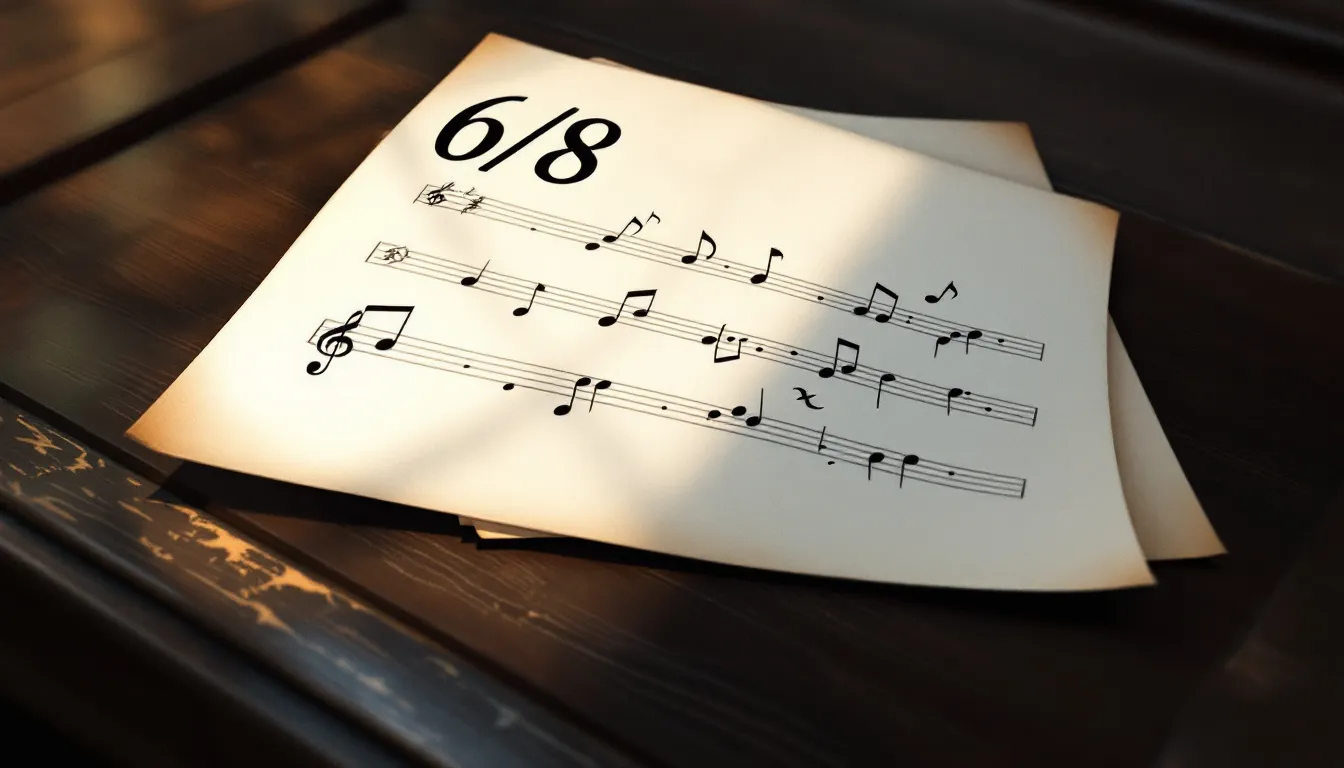
Mastering Half Note Notation in 6/8 Time Signature

Mastering Half Note Notation in 6/8 Time Signature

Introduction to Musical Notation Imagine trying to read a book where the words are jumbled or missing punctuation—frustrating, right? Clear musical notation is similarly crucial; it’s the language musicians use to communicate. During my first piano lesson, I was given a sheet of music. The notes resembled little tadpoles swimming across the page, which was […]


Continue reading →
Understanding Complex Chord Notations in Gb Major

Understanding Complex Chord Notations in Gb Major

Introduction to Gb Major Chords When I first encountered Gb major chords, it felt akin to learning a new language. The notations appeared as secret codes, each harboring its own mystery. Understanding them is like unlocking a musician’s treasure chest. Recognizing unusual chords not only enriches your playing but also infuses your compositions with magic. […]


Continue reading →