Quick Answer
Gregorian chant is a beautiful and ancient form of plainchant integral to Roman Catholic Church liturgical services for centuries. Recognized for its serene and meditative melodies, often sung in Latin, it requires familiarity with its unique notation system, including neumes, clefs, and rhythmic modes. Understanding these elements and practicing regularly will enable you to read and sing Gregorian chant proficiently.
Embarking on this journey into Gregorian chant begins with exploring its rich history and purpose.
What Is Gregorian Chant?
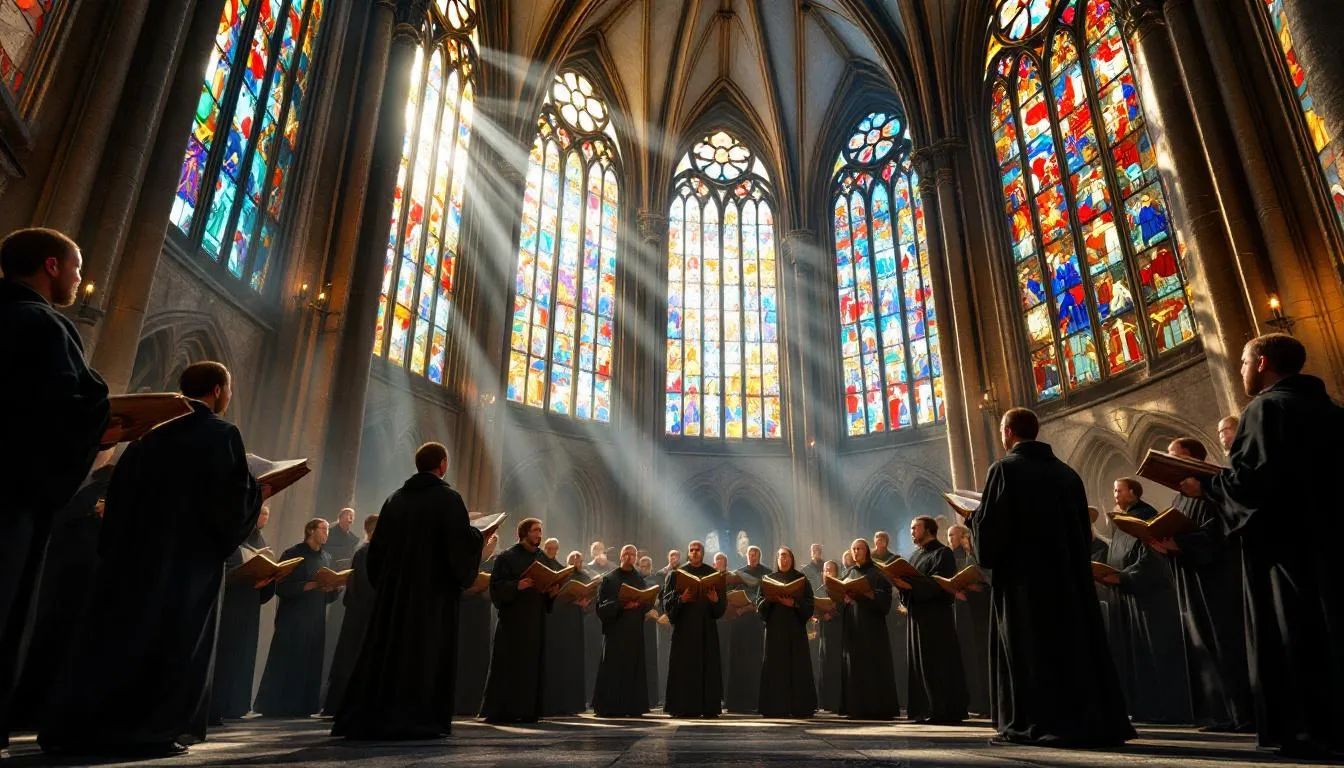
Imagine entering a majestic cathedral where serene melodies gracefully echo off the walls. This is the timeless beauty of Gregorian chant. It’s more than just music; it’s a spiritual experience that has been part of the Roman Catholic Church for over a thousand years.
This form of chant traces back to the early Middle Ages, around the 9th and 10th centuries. Named after Pope Gregory I, who is often credited with organizing the chants, it was created to unify the Church’s liturgical music across Europe. This historical richness is a key aspect of its captivating nature.
In religious services, Gregorian chant serves as a meditative backdrop, creating an atmosphere of solemnity and reflection. The chants enhance the liturgy, making the divine texts more accessible and memorable to the congregation.
Its monophonic texture sets Gregorian chant apart. This means all singers perform a single melodic line in unison, without instrumental accompaniment or harmony. The simplicity and purity of this style make it enchanting.
Traditionally, Gregorian chant text is in Latin, adding mystique and historical authenticity. Having taught and learned these chants, I can attest that the Latin language, with its rhythmic cadence, contributes to the chant’s spiritual depth.
With its unique notation system, delving into Gregorian chant is like unlocking a musical treasure chest.
How Do You Read Gregorian Chant Notation?
Gregorian chant notation is a musical language that requires practice to master, but once understood, it is incredibly rewarding. At its core are neumes, symbols representing musical notes. Unlike modern notation’s familiar dots on a staff, neumes resemble little squiggles or shapes above the text, indicating melody direction.
Understanding neumes is crucial:
- Basic Neumes: The most common neumes include the punctum (a single note), the podatus (two notes ascending), and the clivis (two notes descending). Each guides you through the melody, like a gentle musical map.
- Differences from Modern Notation: Unlike modern notation, which specifies exact pitches and rhythms, neumes suggest the melody’s contour rather than dictating every detail.
Clefs are your starting point for determining pitch:
- Types of Clefs Used: Gregorian chant uses the C clef and the F clef. Unlike modern notation, these are stable and help you find your starting notes.
- How Clefs Affect Pitch: The clef’s placement on the four-line staff sets the pitches for the neumes. For instance, if the C clef is on the third line, that line represents the note C.
Regarding rhythm, Gregorian chant has a unique approach:
- Grasping Rhythmic Modes: Unlike modern music with strict time signatures, Gregorian chant flows more freely.
- Lack of Fixed Rhythm: There are no measures or bar lines to confine the notes. Instead, the rhythm is flexible and follows the text’s natural flow.
- Interpretation of Rhythmic Flow: As a singer, interpret the rhythm by listening to the language’s cadence and the subtle hints given by the neumes. It might feel unusual at first, but it becomes intuitive with practice.
I often tell my students to imagine the chant as a river, letting the words and melody guide them like a gentle current. This approach helps in understanding the notation and captures the chant’s meditative essence.
With a grasp on reading Gregorian chant, let’s explore some tips for singing it with grace and confidence.
What Are Some Tips for Singing Gregorian Chant?
Singing Gregorian chant requires maintaining a pure and focused sound. Here are tips to help you sing these ancient melodies gracefully:
Vocal Techniques and Proper Breathing
Picture a Gothic cathedral’s vastness, and imagine your voice filling it with serene sound. Achieving this involves mastering a few vocal techniques.
- Breathing and Posture: Stand tall and relaxed, with shoulders down. Breathe from your diaphragm, allowing your abdomen to expand as you inhale deeply. This supports a steady, resonant tone.
- Vocal Clarity: Focus on enunciation. Every Latin syllable should be clear, like droplets of water in a fountain. This clarity is crucial for the text to shine through.
Exploring Singing Styles
Gregorian chant includes various singing styles that add expressiveness:
- Syllabic Chant: One note per syllable, straightforward and meditative, like a gentle walk through a garden.
- Neumatic Chant: Groups of notes per syllable, adding a richer texture, like meandering through a forest path.
- Melismatic Chant: Flourishes of notes on a single syllable, akin to a bird’s intricate song.
Adapting and Practicing
Embrace the chant’s flow by tuning into its natural rhythm. Practice diligently, listen to recordings, and consider joining a schola or choir for a communal experience. This supportive environment can be incredibly motivating.
Equipped with tips for singing Gregorian chant, let’s explore where you can find resources to deepen your understanding and practice.
Where Can You Find Resources for Learning Gregorian Chant?
In the digital age, a wealth of resources is available for immersing yourself in Gregorian chant. The internet offers various platforms and tutorials for both beginners and seasoned chanters. Websites like YouTube host channels with instructional videos and performances, allowing you to grasp chant nuances visually and audibly.
Structured learning is available through several websites and online courses offering comprehensive lessons. Some platforms even provide interactive sessions with feedback from experienced instructors. I often recommend exploring websites dedicated to liturgical music, as they typically have sections focusing on Gregorian chant with detailed lessons and historical context. For those also interested in general music theory, such as understanding chords and scales, digital tools like Piano Companion can be a flexible resource for songwriters, producers, teachers, and students.
Books and sheet music are invaluable for anyone serious about mastering Gregorian chant. Consider investing in essential texts and collections that delve into the history and technique of chant. The “Liber Usualis,” for example, is a classic resource containing a comprehensive collection of chants used in the Roman Rite.
Community engagement can greatly enhance your learning experience. Joining local chant groups or choirs offers regular practice and guidance from experienced singers. Workshops and events provide opportunities for immersive learning and connecting with others who share your passion. A highly recommended resource for beginners is A Beginners Guide to Reading Gregorian Chant, a practical guide to quickly grasp the notation fundamentals.
Participating in these groups not only improves your skills but also enriches your understanding of Gregorian chant’s cultural and spiritual heritage. Engaging with a community can be both inspiring and rewarding, offering a sense of belonging and shared purpose.
With these resources, embark on your Gregorian chant journey with confidence and enthusiasm.
Key Takeaways
- Gregorian chant, with its spiritual and historical depth, is accessible to anyone willing to learn.
- Become familiar with neumes, clefs, and rhythms to unlock Gregorian chant’s unique notation.
- Dedicate time each day to practice; consistency is key to mastering the art.
- Utilize online resources, books, and community groups to enhance your learning experience.
- Embrace the journey and let the serene beauty of Gregorian chant enrich your musical and spiritual life.
Embark on this musical journey and discover the joy of Gregorian chant’s timeless melodies.