Quick Answer
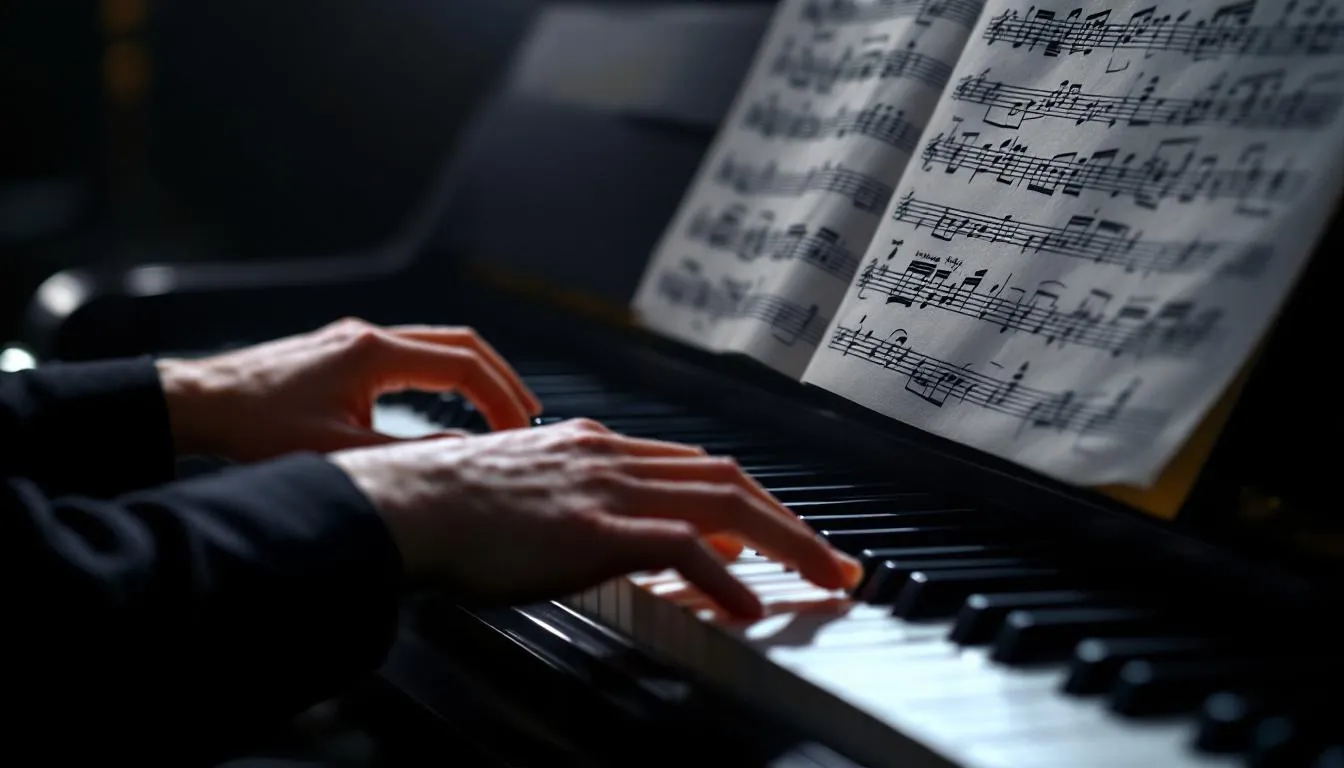
Tremolo in music involves the rapid repetition of a single note or chord, producing a trembling effect that injects excitement and texture into a piece. It’s like a musical jolt of energy. Tremolo dashes in sheet music serve as the visual indicators for this effect, appearing as short, angled lines through or around the note stems. Essentially, tremolo dashes instruct musicians to play a note or chord repeatedly and quickly, enriching the sound with rhythmic vitality. Let’s explore how these dashes are notated and their fundamental principles.
What Are the Basics of Tremolo Notation?
To the untrained eye, tremolo dashes might appear as mere scribbles, yet these lines are the gateway to an exhilarating musical experience. When a note features multiple dashes through its stem, it’s your cue to unleash rapid, trembling sounds. Picture it as the musical equivalent of a hummingbird’s wings—swift, precise, and full of life.
Breaking it down further:
- Tremolo Dashes: These short, angled lines cross the note stem or appear above/below a note. The more dashes, the faster the repetition. For instance, three dashes signify a quicker tremolo than one or two.
- Single-Note Tremolo: This technique involves rapidly repeating a single note, akin to tapping your pen on a desk out of excitement or impatience. Each tap is distinct yet part of a continuous motion.
- Multi-Note Tremolo: Alternating quickly between two notes creates a shimmering effect, much like a musical seesaw. Common in orchestral string sections or on keyboard instruments, it adds richness and drama. For musicians working with keyboard instruments, understanding complex notations like tremolo, alongside comprehensive music theory, is key. Apps such as Piano Companion can assist with exploring chords and scales, which are fundamental to all musical expression.
As a music teacher, I often compare tremolo to a finely tuned engine revving up. More dashes mean higher RPMs, requiring both precision and flair from the performer. Understanding these notations empowers musicians to transform black-and-white dots on a page into vibrant performances. Now, let’s see how these dashes influence the way music is played.
How Do Tremolo Dashes Affect Performance?
Tremolo dashes are akin to a musical rollercoaster ride, influencing tempo and rhythm in thrilling ways. When you encounter these dashes, it’s a signal to accelerate your playing. They’re the green light in a race, urging musicians to speed up. As you encounter more dashes, a single note transforms into a flurry of sound, demanding precision in execution. It’s a workout for both fingers and mind.
In terms of expression and dynamics, tremolo dashes add emotional layers. Imagine telling a suspenseful story; tremolo becomes the heartbeat moment, building tension and anticipation. It captures mood and drama, whether it’s the quiet quiver of a delicate passage or the thunderous roll in a dramatic crescendo. A well-placed tremolo can change the entire atmosphere of a piece, offering either a whispering secret or a roaring declaration.
From my teaching experience, I’ve seen students light up when mastering tremolo. It’s like discovering a new color to paint with, enriching their musical palette. Just when you think you’ve mastered it, music notation presents a twist—different composers and engravers might interpret tremolo dashes with unique flair.
How Do Interpretations Vary Among Engravers?
In musical notation, engravers are like artists with distinct styles. They bring a personal touch to how music is visually represented, and tremolo dashes are no exception. Just as some painters prefer bold, thick lines and others favor delicate strokes, engravers have their own preferences.
These engraving practices can vary significantly. Some engravers use longer, sweeping dashes to signify a broader tremolo, while others prefer shorter, compact lines suggesting quicker repetition. I’ve encountered scores where the dashes resemble tiny, energetic lightning bolts!
Consider these examples of varied tremolo notation:
- Contextual Interpretation: An engraver’s style may reflect the music’s character—gentle curves for a lullaby or sharp lines for a tempestuous symphony.
- Instrument-Specific Notation: The way tremolo dashes are notated can depend on the instrument. For strings, dashes may be more pronounced to indicate bowing speed, while for piano, they might be subtler, focusing on finger technique.
These variations highlight the personal interpretations engravers bring to music, making each score a unique piece of art. Understanding these nuances not only enriches our appreciation but also enhances our ability to perform with authenticity and depth. This insight into notation paves the way for exploring why mastering tremolo notation is crucial for musicians.
Why Is Understanding Tremolo Notation Essential?
Imagine being at a concert where the orchestra plays a piece that suddenly bursts with energy. That electrifying moment is often driven by tremolo. Understanding tremolo notation is essential for musicians to interpret the music as the composer intended, delivering a spine-tingling experience to the audience.
From my teaching experience, I’ve observed how a solid grasp of tremolo notation elevates a student’s performance from good to unforgettable. It’s like knowing the secret ingredient in a recipe—it adds complexity and depth. When musicians comprehend the nuances of tremolo, they accurately convey the intended emotion and energy. This precision is key to maintaining the piece’s integrity.
Accurate interpretation is one aspect; mastering tremolo also enhances performance quality. A well-executed tremolo can transform a piece, providing a dynamic range that captivates listeners. Think of it as the difference between a flat speech and one filled with vibrant inflection. The latter engages and holds attention, much like a well-played tremolo passage.
For musicians, executing rapid repetitions smoothly and with control can be a defining skill. It’s a challenge that, when mastered, opens a world of expressive possibilities. Let’s summarize the key insights and actionable steps to help any musician tackle tremolo with confidence.
Key Takeaways
- Tremolo dashes indicate rapid note repetition, adding vibrancy and emotion to music.
- More dashes signify faster tremolos; practice with a metronome to master speed and control.
- Study different engraving styles to understand tremolo notation for various instruments.
- Incorporate tremolo into practice sessions to expand expressive capabilities and enhance performance.
- Embrace the challenge of tremolo as an opportunity to deepen your musical expression.
Every tremolo is a chance to infuse your performance with energy and emotion—let it be your expressive signature!