Quick Answer
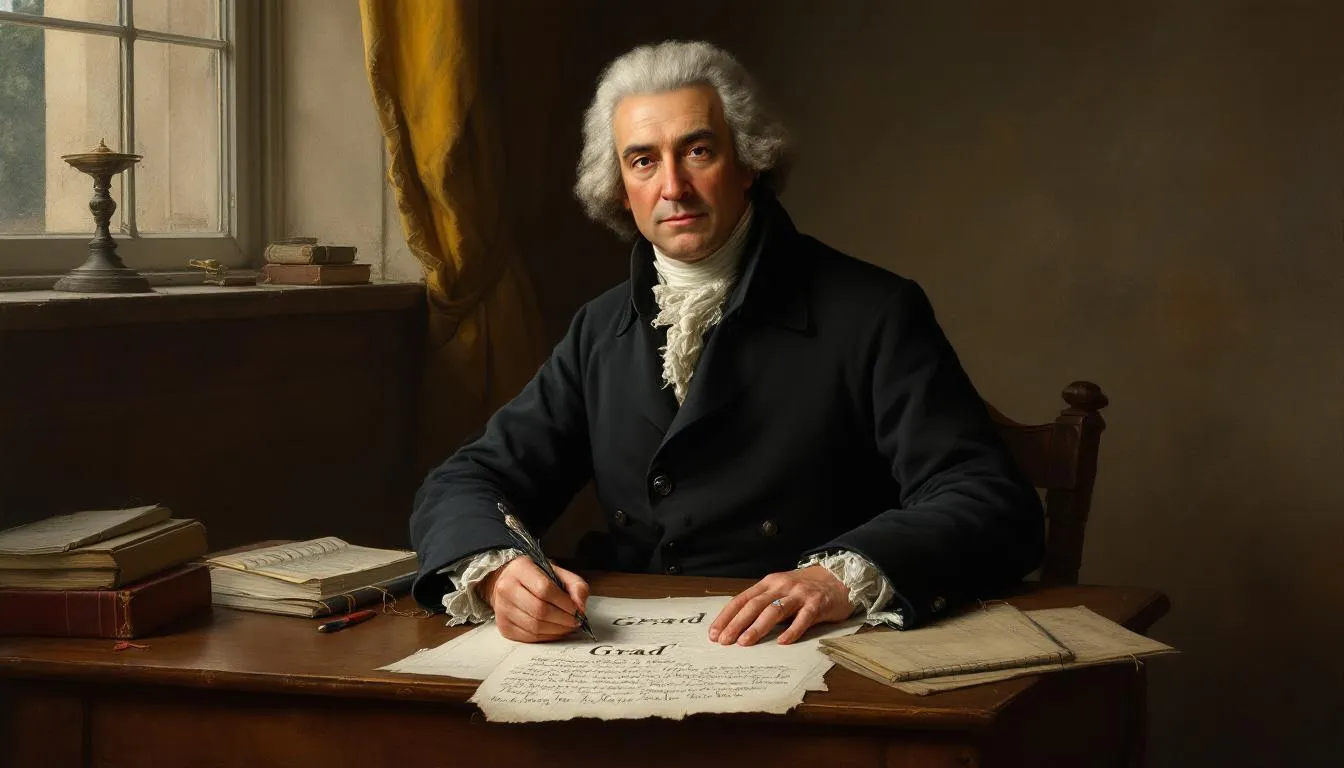
In the realm of music theory, certain figures are as foundational as Euclid is to geometry. These are the thinkers who laid down the principles and frameworks that guide musicians today. Johann Joseph Fux is often hailed as the Euclid of music theory due to his systematic approach in “Gradus ad Parnassum,” a cornerstone for understanding counterpoint. His work has shaped our perception of musical structure and inspired countless composers and theorists. This historical impact invites a deeper exploration of parallels between music and other disciplines.
What Are the Historical Parallels?
Discussing Euclid introduces us to a world of precision, clarity, and structural beauty. His “Elements” laid the groundwork for geometry, akin to an ultimate math guide used for centuries. Imagine a comprehensive manual, not for furniture, but for constructing the universe with logical steps and proofs. Euclid’s influence extended beyond geometry, setting a gold standard that impacted philosophy and science. His methodical approach to breaking down complex ideas resonates across disciplines.
How does this relate to music? Just as Euclid’s “Elements” is foundational to geometry, seminal works in music theory have set the stage for understanding the art of sound. Johann Joseph Fux’s “Gradus ad Parnassum” is one such example, serving as a musical guide, instructing composers on creating harmonic masterpieces. Both Euclid and Fux crafted blueprints, transforming intricate concepts into accessible teachings. Their goal was to build a foundation upon which creativity could flourish.
To highlight these parallels, consider the foundational contributions:
As we delve into music theory, it’s fascinating to see how these foundational concepts continue to influence the great minds who followed. Let’s explore the influential figures who have shaped the world of music theory.
Who Are the Key Figures in Music Theory?
Johann Joseph Fux stands out as a pivotal figure in music theory. His “Gradus ad Parnassum” is a masterclass in counterpoint—a technique involving the interplay of independent musical lines, much like a conversation where each voice contributes to a harmonious whole. Fux’s approach to teaching counterpoint has left a lasting mark on music education, earning him the Euclidean title in this realm.
Fux’s influence reached into the music of luminaries like Haydn, Mozart, and Beethoven, who found inspiration in his teachings. For instance, Mozart’s intricate fugues can trace some roots back to Fux’s principles.
Fux isn’t alone in this realm. Jean-Philippe Rameau is celebrated for his contributions to harmonic theory, laying much groundwork for modern chordal structures. It’s as if he provided the tools to build emotional landscapes with sound. Additionally, Pythagoras’s explorations in mathematical relationships extended into the world of music, with his work on scales and intervals still fundamental today. It’s remarkable that a philosopher from ancient Greece profoundly influenced the sounds we enjoy.
For modern musicians, understanding these foundational concepts is crucial. Tools like Piano Companion, a music theory app for songwriters, producers, teachers, and students, can help apply these principles. It offers a flexible piano chord and scale dictionary, allowing you to find chords or scales by key or using an external MIDI keyboard. This helps bridge the gap between historical theory and contemporary practice.
These figures have etched their names in music theory’s annals, but their works are just the beginning. There are texts and teachings that illuminate the paths they paved.
What Are the Seminal Texts That Define Music Theory?
Consider the essential texts defining music theory, and Johann Joseph Fux’s “Gradus ad Parnassum” undoubtedly tops the list. Written in the early 18th century, it guides counterpoint—the art of combining independent melodies harmoniously. Fux presents his teachings through a teacher-student dialogue, creating an engaging masterclass. This format allows readers to grasp complex concepts in a conversational tone.
Fux’s systematic approach breaks down counterpoint into manageable steps, similar to a recipe for baking a cake. Starting with simple intervals, one gradually builds intricate compositions. This structure is why “Gradus ad Parnassum” is foundational; it offers a blueprint for aspiring composers, akin to a well-trodden path in a dense forest.
Beyond Fux, Jean-Philippe Rameau’s “Traité de l’harmonie” is another cornerstone text. Rameau’s work explores harmony foundations and chordal structures, providing theoretical underpinnings for much of Western music. It’s as if he gave us keys to unlocking music’s emotional power.
J.S. Bach’s “The Art of Fugue” stands as both a compositional masterpiece and a theoretical treatise. Bach explores the possibilities of the fugue form exhaustively, demonstrating depth and complexity within a single musical form.
These texts form the bedrock of Western music theory, each contributing unique insights and methods. Their parallels with other fields of study, like language, offer intriguing perspectives.
How Do Linguistic Analogs Relate to Musical Theory?
Music is often described as a universal language, and this isn’t merely poetic. The parallels between music and spoken language offer fascinating insights into how we communicate through sound. Just as words and sentences form the backbone of spoken language, notes and rhythms create music’s structure. Both systems use symbols—letters for language, notes for music—to convey meaning.
In linguistic structures, grammar rules dictate sentence formation, ensuring clarity and coherence. Similarly, music relies on harmony and counterpoint rules, guiding composers to create pleasing, understandable works. For example, I compare musical notation to writing punctuation when teaching. A rest in music, like a period in a sentence, provides a necessary pause, shaping the phrase.
Syntax in music refers to arranging musical elements, much like sentence structure in language. The order of notes and chords can completely change a piece’s feel, akin to how word order affects meaning in a sentence. For instance, a simple melody evokes different emotions in a major key versus a minor key, just as tone changes alter a sentence’s meaning.
Moreover, semantics in language, which deals with meaning, finds its musical counterpart in expression. A crescendo might communicate rising excitement or tension, while a diminuendo suggests a calming resolution. I recall a student expressing surprise at how a shift in dynamics made a familiar piece feel entirely new, much like a change in emphasis can alter a listener’s interpretation of a spoken sentence.
In both music and language, structural and expressive elements create a rich communication tapestry. Understanding these parallels enhances our appreciation and mastery of musical theory, opening doors to new ways of thinking about both disciplines. Let’s distill these insights into actionable steps and quick facts.
Key Takeaways
- Johann Joseph Fux is a cornerstone figure in music theory, akin to Euclid in geometry, known for his systematic approach to teaching counterpoint.
- “Gradus ad Parnassum” serves as a foundational text, offering a step-by-step guide to mastering counterpoint for musicians.
- Linguistic parallels enhance our understanding of music theory; think of music as a language with its grammar and syntax.
- Explore musical texts and theory with the same curiosity you would a new language; it opens up a world of creative possibilities.
Embrace the journey of learning music theory—beyond understanding, it’s about expressing your unique musical voice. Dive in and let your creativity shine!