Quick Answer
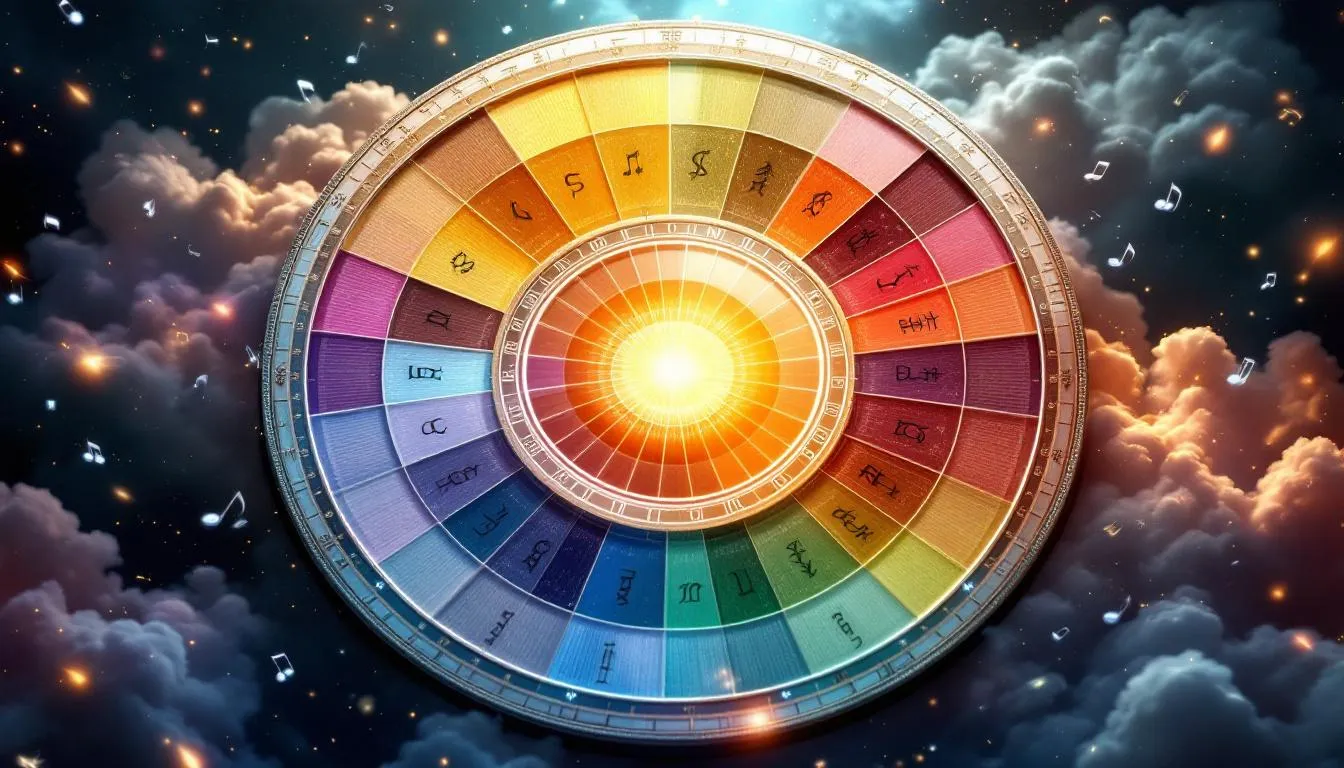
Musical modes are variations of scales that give music its unique character and mood. Derived from the major scale, each mode starts on a different note, creating distinct sounds. Visual aids like diagrams or color-coded charts simplify understanding these modes, offering an intuitive grasp of their function in music. Essentially, musical modes are scales with specific patterns, and visual aids are key to mastering them.
Let’s explore what makes these modes so intriguing and their role in various musical traditions.
What Are Musical Modes?
Musical modes are fascinating topics in music theory, acting as the flavorful spices in our auditory stew. At their core, modes are specific types of scales that provide distinct emotional tones and textures to music. Imagine each mode as a unique color on a painter’s palette, enabling musicians to evoke different feelings and atmospheres.
There are seven primary modes, each starting on a different note of the major scale: Ionian (essentially the major scale), Dorian, Phrygian, Lydian, Mixolydian, Aeolian (the natural minor scale), and Locrian. Each has its own sequence of whole and half steps, creating its characteristic sound. For instance, the Dorian mode, often used in jazz and folk music, exudes a minor quality with a brighter twist, while the Lydian mode introduces an ethereal, dreamy quality due to its raised fourth.
Historically, modes have roots in ancient Greece, where they expressed different emotions and ideas. The Greeks believed in the ethical power of modes, attributing moral qualities to each one. This historical context influences our modern understanding, as modes continue to shape diverse musical traditions worldwide, from medieval chants to contemporary jazz.
Reflecting on my musical journey, experimenting with the Mixolydian mode on my guitar was a revelation. Its bluesy vibe made my playing feel more soulful, more alive.
As we unravel the tapestry of modes and scales, it becomes clear how these musical elements interweave to create the rich fabric of sound we enjoy today.
How Do Modes Differ from Scales?
To appreciate how modes differ from scales, we first need to understand what a musical scale is. A scale is a series of notes ordered by pitch, typically spanning an octave. The most commonly known scale is the major scale, following a specific pattern of whole and half steps (W-W-H-W-W-W-H). This pattern acts as a musical blueprint, guiding composers and performers in crafting melodies and harmonies.
Think of modes as variations or “flavors” of these scales. While a mode is technically a type of scale, it deviates from the standard major or minor scales by starting on different notes and altering the sequence of steps. This shift in tonal center and structure gives each mode its unique character.
When I first played the Phrygian mode on the piano, its exotic sound transported me to a bustling Spanish plaza, a stark contrast to the comforting embrace of the major scale. By experimenting with modes, you can dramatically shift the mood and style of your music.
Next, we’ll explore how the Circle of Fifths can simplify understanding and applying these modes in your musical journey.
How Can the Circle of Fifths Help?
The Circle of Fifths is a powerful tool for musicians, akin to a Swiss army knife for understanding the relationships between different keys and modes. Picture it as a clock face, with each hour representing a key signature. Moving in perfect fifths, it helps decipher musical relationships and transitions.
Visualizing modes through the Circle of Fifths illuminates how each mode correlates with different key signatures, offering a roadmap for seamless key changes and modal explorations. When I first explored this concept, it felt like unlocking a secret code; suddenly, the notes and keys made sense, and my improvisations gained a new level of sophistication.
Here’s a step-by-step guide to using the Circle of Fifths for modes:
- Start with the major scale’s key on the Circle. For example, C major is at the top.
- Identify the Ionian mode (major scale) for C major. This is your starting point.
- Move clockwise to explore other modes. For instance, the D Dorian mode corresponds to the second step of the C major scale.
- Continue around the circle to locate additional modes, such as E Phrygian for the third step, and so on.
- Experiment by playing these modes on your instrument, noting how each one feels and sounds distinct.
Utilizing this tool can significantly enhance your understanding of musical modes, making it easier to experiment and compose with confidence.
As you become more comfortable with the Circle of Fifths, you might find yourself curious about other intriguing scales that add even more color to your musical palette.
What Are Some Lesser-Known Scales?
In the vast world of music theory, some scales remain hidden gems, waiting to be discovered by adventurous musicians. Among these are the harmonic major and other unique scales that offer fresh sonic landscapes.
The harmonic major scale is like the harmonic minor’s lesser-known cousin. It shares the major scale’s foundation but spices things up with a lowered sixth, creating a distinctive, slightly exotic sound. Picture this: the harmonic major is like adding a surprise twist to your favorite dish, one that intrigues the palate with its unexpected tang.
Then there’s the double harmonic scale, also known as the Byzantine scale. Its symmetrical structure and exotic sound are often associated with Middle Eastern music. When I first played it on my guitar, the notes seemed to transport me to a bustling bazaar, teeming with vibrant colors and aromas.
To incorporate these scales into your practice, start by familiarizing yourself with their unique patterns. For example, the harmonic major features the sequence: W-W-H-W-H-W+H-H (W+H being a whole and a half step). Visualize this on your instrument, noting how it differs from the familiar major scale.
Consider these tips for incorporating unique scales into your practice:
- Start slowly: Practice the scale in various keys, focusing on its unique intervals.
- Compose a short piece: Use the scale as your foundation, letting its distinct sound guide your creativity.
- Improvise: Play along with a backing track, experimenting with the scale’s unique tonal qualities.
These scales are keys to unlocking new musical expressions, broadening your repertoire and inspiring fresh creativity. As we explore the next topic, we’ll see how visual aids can further enhance your understanding and mastery of musical modes.
How to Use Visual Aids for Learning Modes?
Visual aids are like the GPS for your musical journey, guiding you through the complex terrain of musical modes with clarity and ease. As a music teacher, I’ve seen firsthand how graphics can transform an abstract concept into something tangible and accessible. Just like how a map makes planning a road trip simpler, visual tools in music theory give you a clearer path to understanding.
One of my favorite visual aids is the mode wheel, which highlights the sequence of whole and half steps for each mode. It’s a colorful, circular chart that visually represents how each mode diverges from the major scale, making it easier to grasp these differences at a glance. Another great tool is the fretboard diagram for guitarists, which maps out the notes of each mode across the neck. This helps players see patterns and fingerings, turning theory into practice.
Online platforms like musictheory.net offer interactive diagrams and exercises that cater to various learning styles. Tools like Piano Companion, a music theory app for songwriters, producers, teachers, and students, are invaluable for visualizing modes and scales, helping you internalize their structures. It’s a flexible piano chord and scale dictionary with user libraries, reverse mode, circle of fifths, and a chord progression builder with common patterns, and can even help you find a chord or scale by key or using an external MIDI keyboard. For example, just press C and G, and you will get C Major as the first piano chord in the search result. If you don’t see a piano chord or a specific scale, you can create a custom piano chord or scale and use it for chord charts or your user library.
To put these visual aids to work, try this practical exercise: choose a mode, use a diagram to study its pattern, and then play it on your instrument. Pay attention to how it sounds and feels. For an added challenge, create a short melody or riff using that mode. This hands-on approach reinforces learning and makes the abstract more concrete.
With these visual tools, you’ll soon find modes becoming second nature, opening up new dimensions in your musical exploration. As we wrap up our discussion, let’s recap some key points.
Key Takeaways
- Musical modes are scale variations that add unique emotional colors to music.
- The seven primary modes each have distinct patterns and sounds, from the bright Ionian to the exotic Phrygian.
- Visual aids like mode wheels and fretboard diagrams simplify understanding and mastering modes.
- Interactive online resources enhance learning through engaging exercises.
- Experimenting with modes opens new creative avenues in music composition and improvisation.
Dive into the world of modes with curiosity and creativity, and let your musical journey become a vibrant masterpiece!